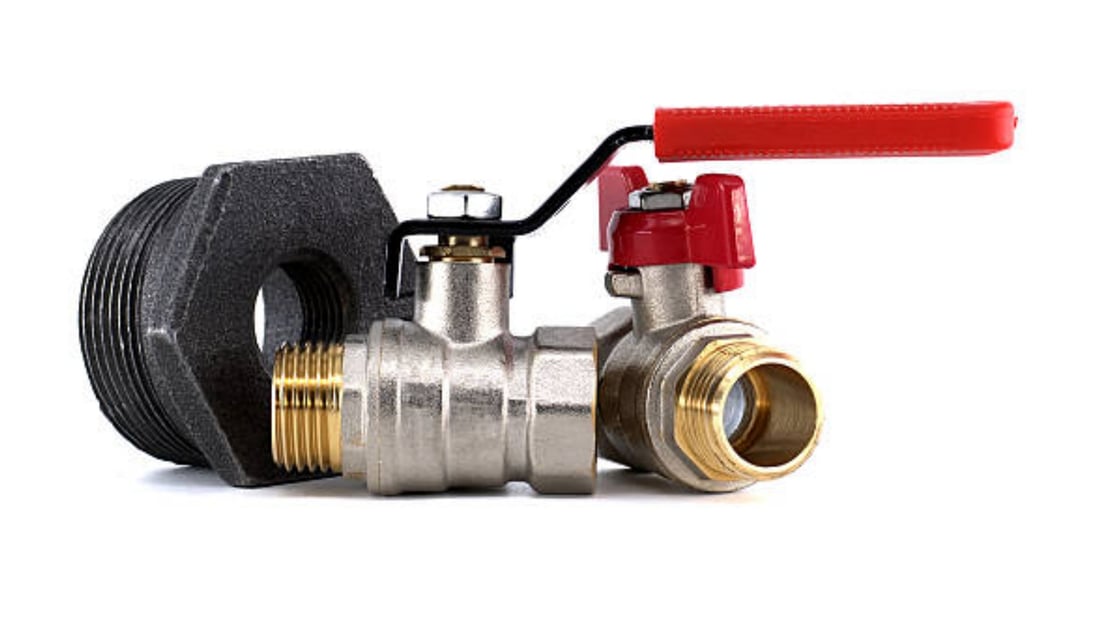
An Industrial Double Union Ball Valve is a type of quarter-turn valve designed to regulate the flow of liquids and gases within pipelines. It features a spherical ball with a hole through its center, which aligns with the flow path when open and rotates to block flow when closed. The “double union” aspect refers to the valve’s two union joints that facilitate easy removal and installation without disturbing adjoining piping. Constructed from robust materials like stainless steel, brass, or carbon steel, these valves ensure durability and high performance in industrial applications.
Key Advantages of Double Union Design in Industrial Ball Valves
The double union design significantly improves maintenance efficiency. These unions enable quick disassembly, making valve cleaning, repair, or replacement straightforward without extensive downtime. This design provides superior leak-tight sealing and allows for directional flow adjustment during installation. The modular nature of double union ball valves extends equipment lifespan and reduces operational costs by simplifying maintenance procedures.
Applications Across Industrial Sectors
Industrial Double Union Ball Valves find extensive applications across various sectors, including petrochemicals, pharmaceuticals, food processing, water treatment, and oil and gas. Their versatility in handling different fluids—ranging from corrosive chemicals to high-pressure steam—makes them an essential component in systems requiring reliable on/off and throttling capabilities. The ease of maintenance suits environments where frequent valve servicing is necessary.
Material Selection and Corrosion Resistance
Choosing the correct material for Industrial Double Union Ball Valves depends on the application’s chemical and physical conditions. Stainless steel variants offer exceptional corrosion resistance for aggressive media, while brass is preferred for potable water systems. Carbon steel provides high strength and is commonly used in high-pressure applications. Material quality directly impacts the valve’s durability, resistance to wear, and ability to withstand temperature fluctuations.
Operational Mechanisms and Control Options
These valves typically operate through manual lever handles, though they can also be integrated with automated actuators for remote control. Automation allows for precise flow regulation and integration into complex process control systems. Industrial Double Union Ball Valves engineered with electric or pneumatic actuators improve system responsiveness and reduce manual labor requirements, enhancing safety and operational efficiency.
Installation Flexibility and Pipeline Compatibility
The double union feature offers notable installation flexibility. Valves can be mounted directly into pipelines with minimal disturbance, and the warranty-friendly union nuts allow quick disconnection for maintenance without cutting or welding pipes. Compatibility with different piping sizes and standards (such as ANSI, DIN) ensures seamless integration within existing systems, minimizing adaptation costs.
Performance in High-Pressure and High-Temperature Environments
Industrial Double Union Ball Valves are engineered to perform reliably under extreme conditions. Their design supports pressure ratings often exceeding 6000 psi and temperatures ranging from cryogenic levels to over 500°F. The precise machining and seat materials contribute to tight sealing even under fluctuating pressures and temperatures, making them suitable for critical industrial applications.
Sealing Technologies for Leak Prevention
An important aspect of these ball valves is their sealing mechanism. Typical designs incorporate PTFE, PEEK, or reinforced elastomer seats that create a tight seal around the ball to prevent leakage. Double union valves benefit from enhanced seat alignment due to the removable unions, ensuring consistent sealing performance. Proper seal selection enhances valve longevity and reduces risk in handling hazardous fluids.
Cost Effectiveness and Lifecycle Considerations
While Industrial Double Union Ball Valves may have slightly higher upfront costs than single union or integral body valves, the ability to easily remove and service them offers long-term economic advantages. Reduced downtime, lower maintenance personnel costs, and extended equipment life contribute to a favorable total cost of ownership. Additionally, their robust construction minimizes unexpected failures, ensuring steady production cycles.
Future Trends and Innovations in Valve Technology
Advancements in materials science and automation are driving the development of smarter Industrial Double Union Ball Valves. New coatings improve corrosion resistance, and digital sensors integrated with valves allow real-time monitoring of pressure, temperature, and valve position. These innovations promise increased safety, enhanced diagnostics, and more efficient process management in industrial environments.
Quote Inquiry
contact us